
American Avocet
Recurvirostra americana - Avocette d'Amérique
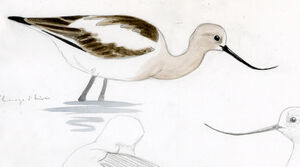
Systematics
-
Order:
Charadriiformes
-
Family:
Récurvirostridés
-
Genus:
Recurvirostra
-
Species:
americana
Descriptor
Biometrics
- Size: 51 cm
- Wingspan: 68 cm.
- Weight: 275 à 350 g
Longevity
9 years
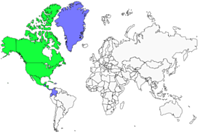
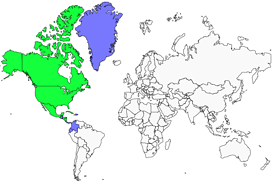
Geographic range
Identification
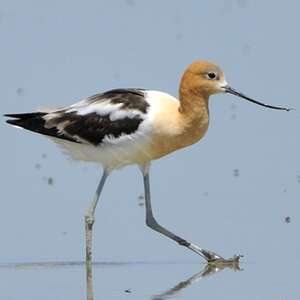
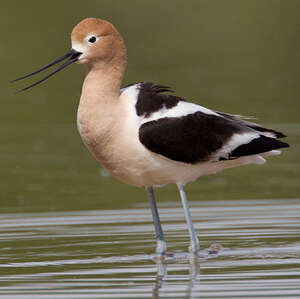
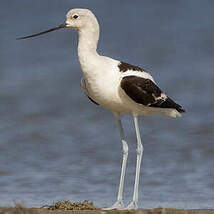
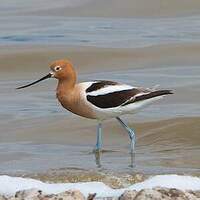
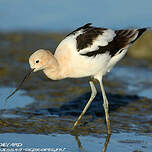
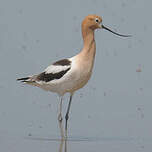
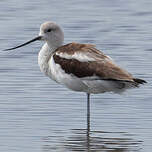
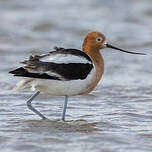
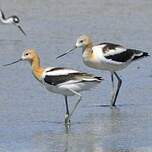
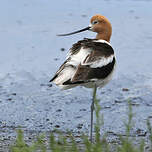
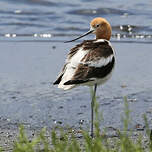
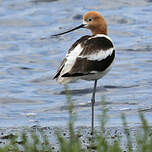
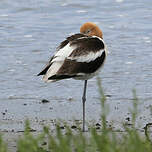
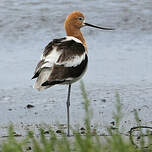
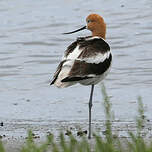
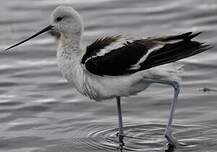
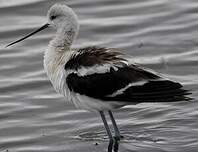
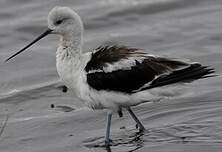
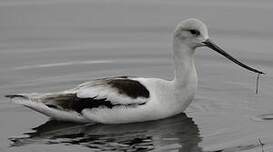
American Avocet (Recurvirostra americana) is a species of bird in the Recurvirostridae family.
Subspecific information monotypic species
Foreign names
- Avocette d'Amérique,
- Avoceta americana,
- alfaiate-americano,
- Braunhals-Säbelschnäbler,
- amerikai gulipán,
- Amerikaanse Kluut,
- Avocetta americana,
- amerikansk skärfläcka,
- Amerikaavosett,
- šabliarka žltokrká,
- tenkozobec americký,
- Amerikansk Klyde,
- preeria-avosetti,
- bec d'alena nord-americà,
- szablodziób amerykański,
- Amerikas avozeta,
- Американская шилоклювка,
- アメリカソリハシセイタカシギ,
- 褐胸反嘴鹬,
- 紅胸反嘴鴴,
Habitat
Wetlands (inland) : Bogs, Marshes, Swamps, Fens, Peatlands ; Marine Intertidal : Salt Marshes (Emergent Grasses)
Threats - protection
IUCN conservation status
Extinct
Threatened
Least
concern
concern
Extinc
in the Wild
in the Wild
Near
threatened
threatened
Not
evaluated
evaluated
EX
EW
CR
EN
VU
NT
LC
NE
Sources of information
- A Guide to the Birds of Mexico and Northern Central America, Steve N. G. Howell, Sophie Webb
- All the Birds of North America, American Bird conservancy's Field Guide
- Birds of Northern South America, an identification guide, Robin Restall, Clemencia Rodner, Miguel Lentino
- All About Birds, Cornell Lab of Ornithology
- ARKive, Christopher Parsons
- Avibase, Lepage Denis
- Bird Web, Seattle Audubon Society
- Canada's Aquatic Environments,
- HBW Alive,
- Wikipedia (English version),
- Wikipédia, Wikipedia, The Free Encyclopedia
- IOC World Bird List (v14.1), Gill, F and D Donsker (Eds). 2024-04-18.
Other sources of interest

- Accipitriformes
- Aegotheliformes
- Anseriformes
- Apodiformes
- Apterygiformes
- Bucerotiformes
- Caprimulgiformes
- Cariamiformes
- Casuariiformes
- Charadriiformes
- Ciconiiformes
- Coliiformes
- Columbiformes
- Coraciiformes
- Cuculiformes
- Eurypygiformes
- Falconiformes
- Galliformes
- Gaviiformes
- Gruiformes
- Leptosomiformes
- Mesitornithiformes
- Musophagiformes
- Nyctibiiformes
- Opisthocomiformes
- Otidiformes
- Passeriformes
- Pelecaniformes
- Phaethontiformes
- Phoenicopteriformes
- Piciformes
- Podargiformes
- Podicipediformes
- Procellariiformes
- Psittaciformes
- Pterocliformes
- Rheiformes
- Sphenisciformes
- Steatornithiformes
- Strigiformes
- Struthioniformes
- Suliformes
- Tinamiformes
- Trogoniformes