
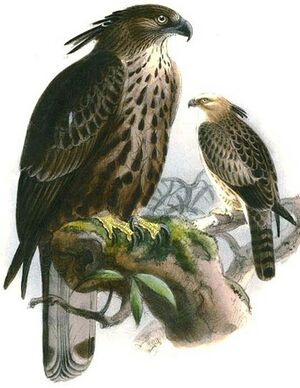
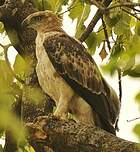
Changeable Hawk-Eagle
Nisaetus cirrhatus - Aigle huppé
Systematics
-
Order:
Accipitriformes
-
Family:
Accipitridés
-
Genus:
Nisaetus
-
Species:
cirrhatus
Descriptor
Biometrics
- Size: 79 cm
- Wingspan: 127 à 138 cm.
- Weight: 1300 à 1900 g
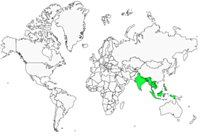
Geographic range
Identification
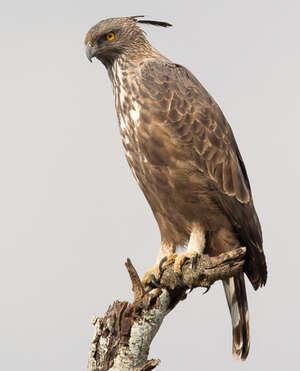
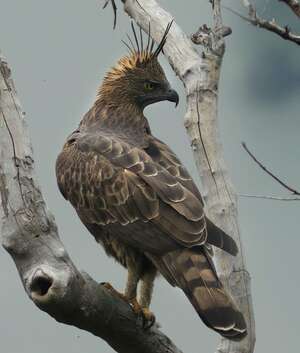
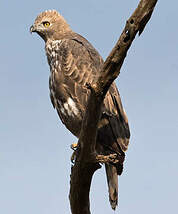
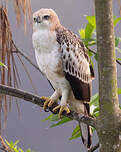
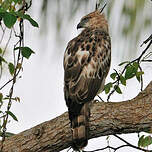
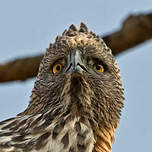
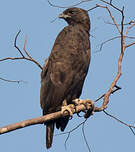
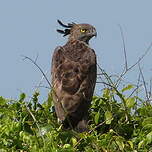
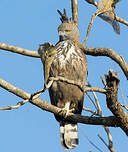
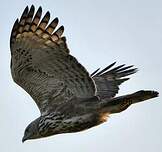
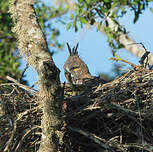
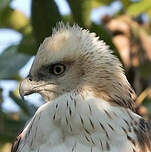
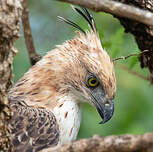
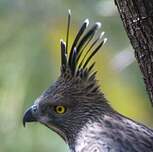
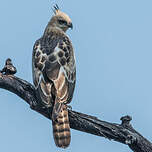
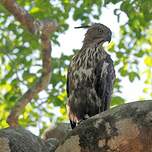
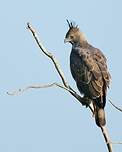
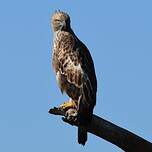
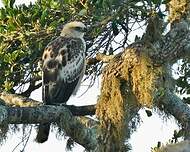
Changeable Hawk-Eagle (Nisaetus cirrhatus) is a species of bird in the Accipitridae family.
Subspecific information 5 subspecies
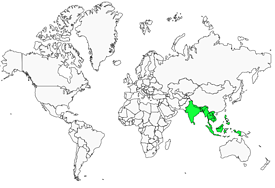
- Nisaetus cirrhatus cirrhatus (s India)
- Nisaetus cirrhatus limnaeetus (n India to Indochina, Malay Pen., Greater Sundas and Philippines)
- Nisaetus cirrhatus ceylanensis (Sri Lanka)
- Nisaetus cirrhatus andamanensis (Andaman Is.)
- Nisaetus cirrhatus vanheurni (Simeulue I.. off w Sumatra.)
Foreign names
- Aigle huppé,
- Águila variable,
- águia-variável,
- Indienhaubenadler,
- főkötős vitézsas,
- Indische Kuifarend,
- Aquilastore variabile,
- orientörn,
- Indiaskogørn,
- orlovec viactvarý,
- orel proměnlivý,
- Lysbuget Høgeørn,
- jalokotka,
- àguila variable,
- wojownik indyjski,
- Изменчивый хохлатый орёл,
- Elang brontok,
- インドクマタカ,
- 凤头鹰雕,
- เหยี่ยวต่างสี,
- 冠鷹鵰,
Habitat
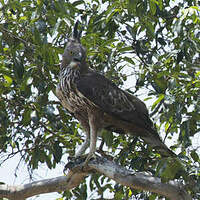
Forest : Subtropical/Tropical Moist Lowland ; Savanna : Dry ; Wetlands (inland) : Permanent Rivers/Streams/Creeks (includes waterfalls), Bogs, Marshes, Swamps, Fens, Peatlands ; Artificial/Terrestrial : Arable Land, Plantations, Rural Gardens
Threats - protection
IUCN conservation status
Extinct
Threatened
Least
concern
concern
Extinc
in the Wild
in the Wild
Near
threatened
threatened
Not
evaluated
evaluated
EX
EW
CR
EN
VU
NT
LC
NE
Sources of information
- Vol. 1 - Handbook of the Birds of the World, Josep del Hoyo-Andrew Elliot-Jordi Sargatal
- IOC World Bird List (v14.1), Gill, F and D Donsker (Eds). 2024-04-18.
Other sources of interest

- Accipitriformes
- Aegotheliformes
- Anseriformes
- Apodiformes
- Apterygiformes
- Bucerotiformes
- Caprimulgiformes
- Cariamiformes
- Casuariiformes
- Charadriiformes
- Ciconiiformes
- Coliiformes
- Columbiformes
- Coraciiformes
- Cuculiformes
- Eurypygiformes
- Falconiformes
- Galliformes
- Gaviiformes
- Gruiformes
- Leptosomiformes
- Mesitornithiformes
- Musophagiformes
- Nyctibiiformes
- Opisthocomiformes
- Otidiformes
- Passeriformes
- Pelecaniformes
- Phaethontiformes
- Phoenicopteriformes
- Piciformes
- Podargiformes
- Podicipediformes
- Procellariiformes
- Psittaciformes
- Pterocliformes
- Rheiformes
- Sphenisciformes
- Steatornithiformes
- Strigiformes
- Struthioniformes
- Suliformes
- Tinamiformes
- Trogoniformes