
Crested Barbet
Trachyphonus vaillantii - Barbican promépic
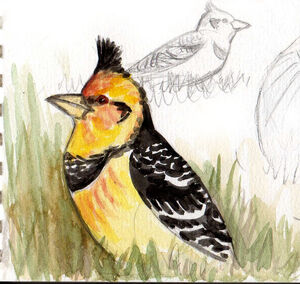
Systematics
-
Order:
Piciformes
-
Family:
Lybiidés
-
Genus:
Trachyphonus
-
Species:
vaillantii
Descriptor
Biometrics
- Size: 23 cm
- Wingspan: -
- Weight: 70 à 85 g
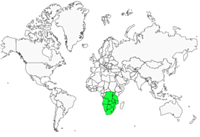
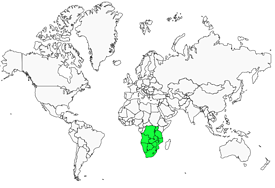
Geographic range
Identification
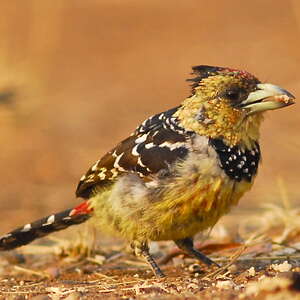
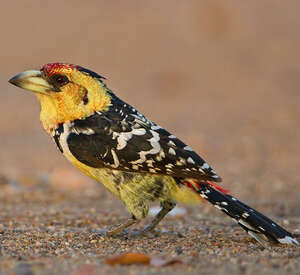
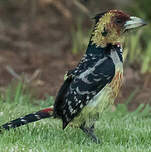
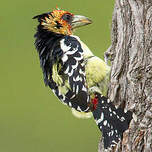
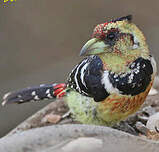
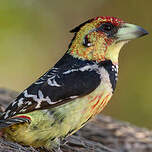
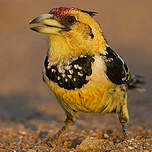
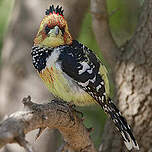
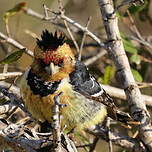
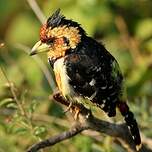
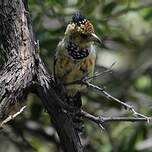
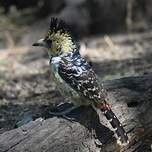
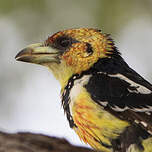
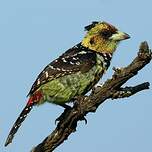
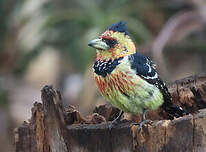
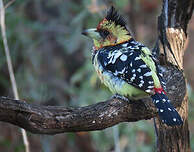
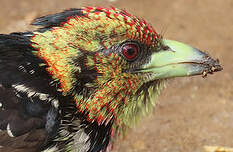
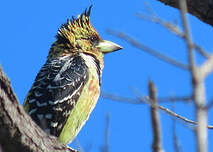
Crested Barbet (Trachyphonus vaillantii) is a species of bird in the Lybiidae family.
Subspecific information 2 subspecies
- Trachyphonus vaillantii vaillantii (s Angola to s Mozambique and e South Africa)
- Trachyphonus vaillantii suahelicus (c Angola and se DRCongo to n Tanzania and c Mozambique)
Foreign names
- Barbican promépic,
- Barbudo crestado,
- barbaças-de-poupa,
- Haubenbartvogel,
- Kuifbaardvogel,
- Barbetto crestato,
- tofsbarbett,
- Topperleskjeggfugl,
- perlavec čiernochrbtý,
- vousák Levaillantův,
- Toppet Perleskægfugl,
- kirjoseppä,
- Kuifkophoutkapper,
- barbut crestat,
- brodal czubaty,
- Хохлатый трахифонус,
- ムナオビオナガゴシキドリ,
- 南非拟啄木鸟,
- 南非擬啄木,
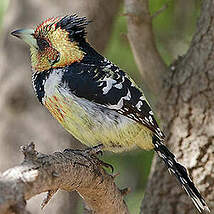
Habitat
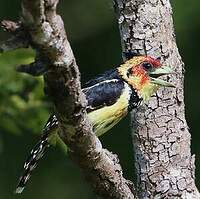
Savanna : Dry ; Shrubland : Subtropical/Tropical Dry ; Artificial/Terrestrial : Plantations
Threats - protection
IUCN conservation status
Extinct
Threatened
Least
concern
concern
Extinc
in the Wild
in the Wild
Near
threatened
threatened
Not
evaluated
evaluated
EX
EW
CR
EN
VU
NT
LC
NE
Sources of information
- Vol. 7 - Handbook of the Birds of the World, Josep del Hoyo-Andrew Elliott-Jordi Sargatal
- Roberts Bird Guide, Hugh Chittenden
- Birds of East Africa, C.A.W. Guggisberg
- Birds of Southern Africa, Ian Sinclair, Phil Hockey, Warwick Tarboton
- Avibase, Lepage Denis
- BirdLife International, BirdLife International
- Wikipédia, Wikipedia, The Free Encyclopedia
- IOC World Bird List (v14.1), Gill, F and D Donsker (Eds). 2024-04-18.
Other sources of interest

- Accipitriformes
- Aegotheliformes
- Anseriformes
- Apodiformes
- Apterygiformes
- Bucerotiformes
- Caprimulgiformes
- Cariamiformes
- Casuariiformes
- Charadriiformes
- Ciconiiformes
- Coliiformes
- Columbiformes
- Coraciiformes
- Cuculiformes
- Eurypygiformes
- Falconiformes
- Galliformes
- Gaviiformes
- Gruiformes
- Leptosomiformes
- Mesitornithiformes
- Musophagiformes
- Nyctibiiformes
- Opisthocomiformes
- Otidiformes
- Passeriformes
- Pelecaniformes
- Phaethontiformes
- Phoenicopteriformes
- Piciformes
- Podargiformes
- Podicipediformes
- Procellariiformes
- Psittaciformes
- Pterocliformes
- Rheiformes
- Sphenisciformes
- Steatornithiformes
- Strigiformes
- Struthioniformes
- Suliformes
- Tinamiformes
- Trogoniformes