
Gabar Goshawk
Micronisus gabar - Autour gabar
Systematics
-
Order:
Accipitriformes
-
Family:
Accipitridés
-
Genus:
Micronisus
-
Species:
gabar
Descriptor
Biometrics
- Size: 36 cm
- Wingspan: 56 à 66 cm.
- Weight: 90 à 240 g
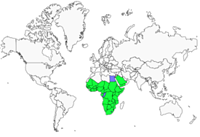
Geographic range
Identification
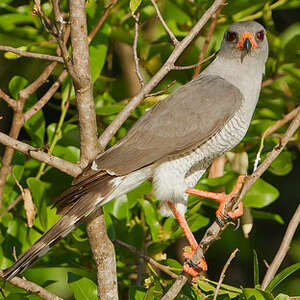
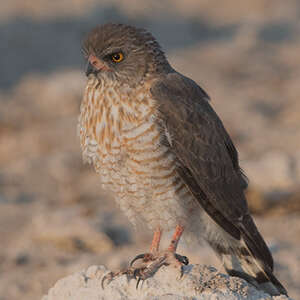
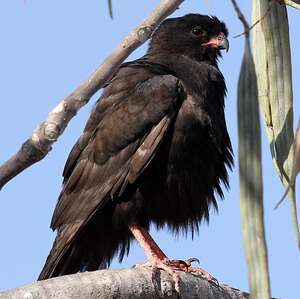
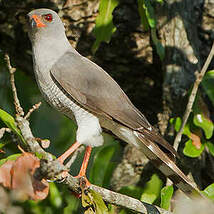
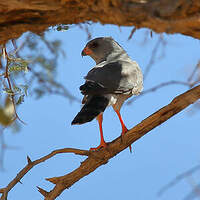
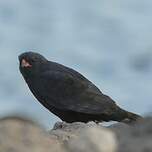
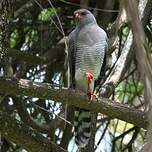
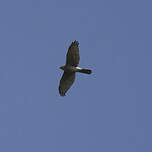
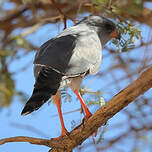
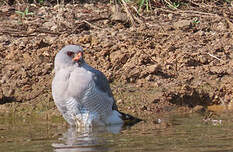
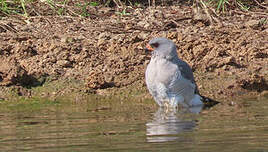
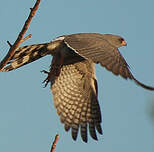
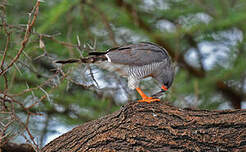
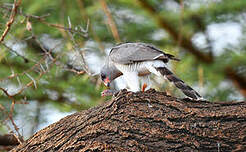
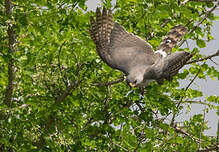
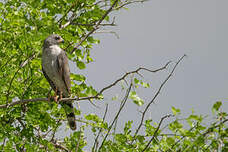
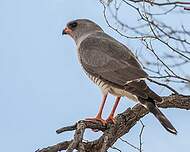
Gabar Goshawk (Micronisus gabar) is a species of bird in the Accipitridae family.
Subspecific information 3 subspecies
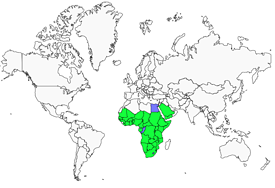
- Micronisus gabar gabar (s Angola to s Mozambique amd South Africa)
- Micronisus gabar niger (Gambia and Senegal to Ethiopia to Cameroon and s Sudan, sw Arabia)
- Micronisus gabar aequatorius (Ethiopia to Gabon, n Zambia and Mozambique)
Foreign names
- Autour gabar,
- Gavilán gabar,
- gavião-palrador,
- Gabarhabicht,
- kis éneklőhéja,
- Gabarhavik,
- Astore gabar,
- gabarhök,
- Gabarhauk,
- jastrabec gabar,
- jestřáb gabar,
- Gabarhøg,
- pikkulauluhaukka,
- Witkruissperwer (Kleinsingvalk),
- astor centinella,
- Þyrnihaukur,
- jastrzębiak mały,
- mazais dziedātājvanags,
- mali golobičar,
- Певчий ястреб-габар,
- カワリウタオオタカ,
- 小歌鹰,
- 紅臉歌鷹,
Habitat
Forest : Subtropical/Tropical Dry ; Savanna : Dry ; Shrubland : Subtropical/Tropical Dry ; Grassland : Subtropical/Tropical Dry ; Wetlands (inland) : Permanent Rivers/Streams/Creeks (includes waterfalls)
Threats - protection
IUCN conservation status
Extinct
Threatened
Least
concern
concern
Extinc
in the Wild
in the Wild
Near
threatened
threatened
Not
evaluated
evaluated
EX
EW
CR
EN
VU
NT
LC
NE
Sources of information
- Birds of Africa South of the Sahara, Ian Sinclair and Peter Ryan
- Birds of Southern Africa, Ian Sinclair, Phil Hockey, Warwick Tarboton
- Birds of Prey of Africa and its Islands, Alan and Meg Kemp
- Raptors of the World, a field guide, Ferguson-Lees James et Christie David
- Vol. 2 - Handbook of the Birds of the World, Josep del Hoyo-Andrew Elliot--Jordi Sargatal
- Avibase, Lepage Denis
- Wikipédia, Wikipedia, The Free Encyclopedia
- IOC World Bird List (v13.2), Gill, F and D Donsker (Eds). 2023.
Other sources of interest

- Accipitriformes
- Aegotheliformes
- Anseriformes
- Apodiformes
- Apterygiformes
- Bucerotiformes
- Caprimulgiformes
- Cariamiformes
- Casuariiformes
- Charadriiformes
- Ciconiiformes
- Coliiformes
- Columbiformes
- Coraciiformes
- Cuculiformes
- Eurypygiformes
- Falconiformes
- Galliformes
- Gaviiformes
- Gruiformes
- Leptosomiformes
- Mesitornithiformes
- Musophagiformes
- Nyctibiiformes
- Opisthocomiformes
- Otidiformes
- Passeriformes
- Pelecaniformes
- Phaethontiformes
- Phoenicopteriformes
- Piciformes
- Podargiformes
- Podicipediformes
- Procellariiformes
- Psittaciformes
- Pterocliformes
- Rheiformes
- Sphenisciformes
- Steatornithiformes
- Strigiformes
- Struthioniformes
- Suliformes
- Tinamiformes
- Trogoniformes