
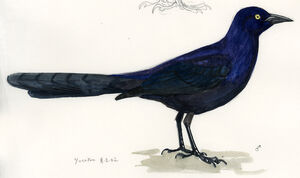
Great-tailed Grackle
Quiscalus mexicanus - Quiscale à longue queue
Systematics
-
Order:
Passeriformes
-
Family:
Ictéridés
-
Genus:
Quiscalus
-
Species:
mexicanus
Descriptor
Biometrics
- Size: 33 à 43 cm
- Wingspan: 58 cm.
- Weight:
Longevity
12 years
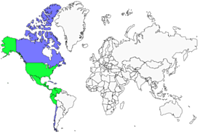
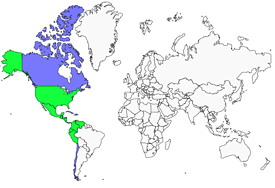
Geographic range
Identification
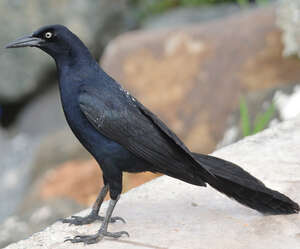
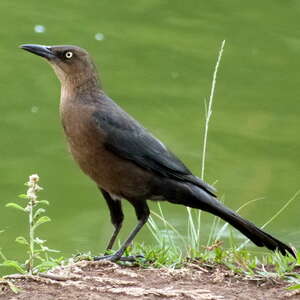
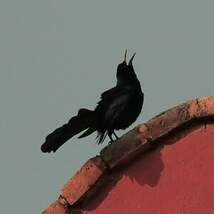
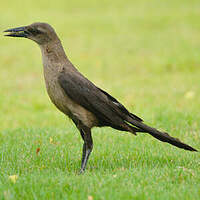
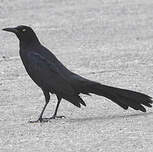
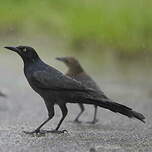
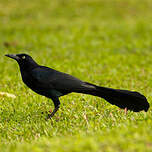
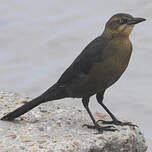
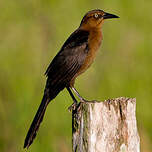
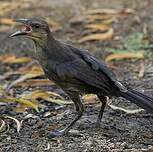
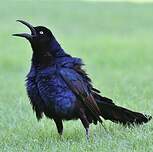
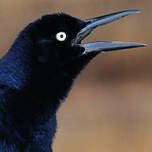
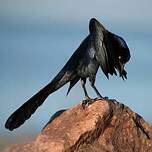
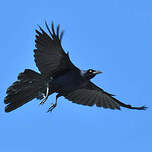
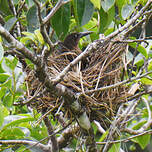
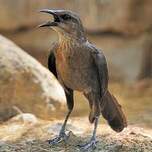
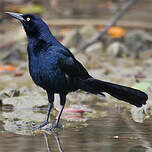
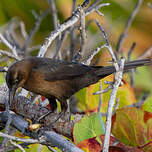
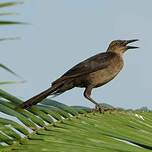
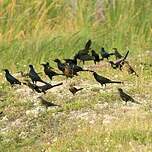
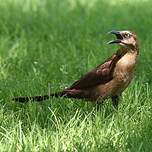
Great-tailed Grackle (Quiscalus mexicanus) is a species of bird in the Icteridae family.
Subspecific information 8 subspecies
- Quiscalus mexicanus mexicanus (c Mexico to Nicaragua)
- Quiscalus mexicanus nelsoni (sw USA and nw Mexico)
- Quiscalus mexicanus graysoni (w Mexico)
- Quiscalus mexicanus obscurus (sw Mexico)
- Quiscalus mexicanus monsoni (wc USA to nc Mexico)
- Quiscalus mexicanus prosopidicola (c and sc USA to ne Mexico)
- Quiscalus mexicanus loweryi (Yucatán Pen.. se Mexico. , Belize and nearby islands)
- Quiscalus mexicanus peruvianus (Costa Rica to Peru and Venezuela)
Foreign names
- Quiscale à longue queue,
- Zanate mexicano,
- iraúna-mexicana,
- Großschwanzgrackel,
- mexikói csónakfarkú,
- Langstaarttroepiaal,
- Gracula codalunga,
- mexikansk båtstjärt,
- Storhaletrupial,
- vlhovec člnkochvostý,
- vlhovec velkoocasý,
- Kragegrackel,
- pitkäpyrstöturpiaali,
- quíscal cua de faisà,
- wilgowron meksykański,
- lielastes pusvārnis,
- Большехвостый гракл,
- オナガクロムクドリモドキ,
- 大尾拟八哥,
- 大尾擬八哥,
Habitat
Forest : Temperate, Subtropical/Tropical Dry, Subtropical/Tropical Moist Lowland, Subtropical/Tropical Mangrove Vegetation Above High Tide Level ; Grassland : Temperate, Subtropical/Tropical Dry ; Wetlands (inland) : Bogs, Marshes, Swamps, Fens, Peatlands ; Artificial/Terrestrial : Arable Land, Pastureland, Rural Gardens, Urban Areas
Threats - protection
IUCN conservation status
Extinct
Threatened
Least
concern
concern
Extinc
in the Wild
in the Wild
Near
threatened
threatened
Not
evaluated
evaluated
EX
EW
CR
EN
VU
NT
LC
NE

Other sources of interest

- Accipitriformes
- Aegotheliformes
- Anseriformes
- Apodiformes
- Apterygiformes
- Bucerotiformes
- Caprimulgiformes
- Cariamiformes
- Casuariiformes
- Charadriiformes
- Ciconiiformes
- Coliiformes
- Columbiformes
- Coraciiformes
- Cuculiformes
- Eurypygiformes
- Falconiformes
- Galliformes
- Gaviiformes
- Gruiformes
- Leptosomiformes
- Mesitornithiformes
- Musophagiformes
- Nyctibiiformes
- Opisthocomiformes
- Otidiformes
- Passeriformes
- Pelecaniformes
- Phaethontiformes
- Phoenicopteriformes
- Piciformes
- Podargiformes
- Podicipediformes
- Procellariiformes
- Psittaciformes
- Pterocliformes
- Rheiformes
- Sphenisciformes
- Steatornithiformes
- Strigiformes
- Struthioniformes
- Suliformes
- Tinamiformes
- Trogoniformes