
Greater Coucal
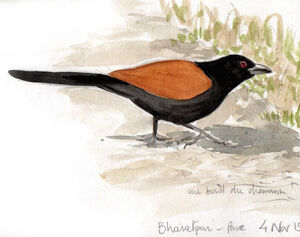
Centropus sinensis - Grand Coucal
Systematics
-
Order:
Cuculiformes
-
Family:
Cuculidés
-
Genus:
Centropus
-
Species:
sinensis
Descriptor
Biometrics
- Size: 52 cm
- Wingspan: -
- Weight: 236 à 268 g
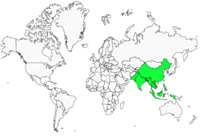
Geographic range
Identification
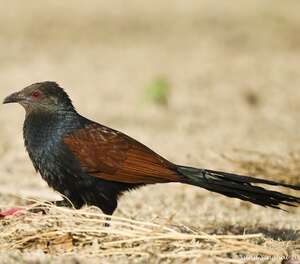
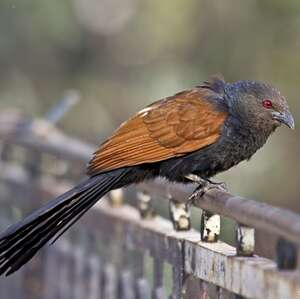
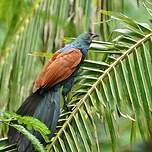
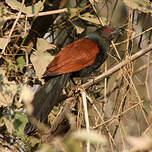
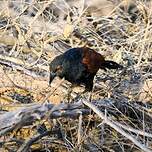
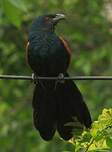
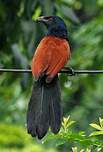
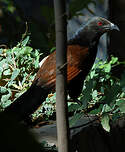
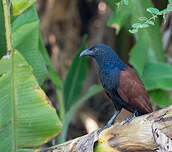
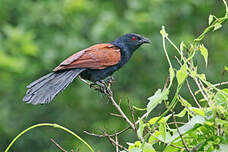
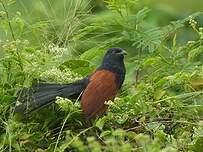
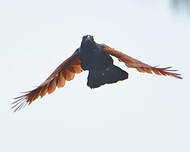
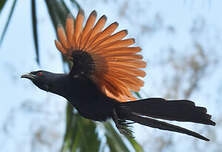
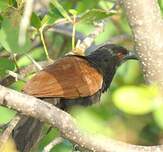
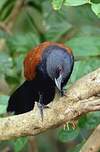
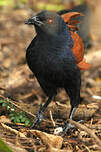
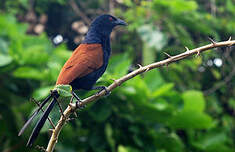
Greater Coucal (Centropus sinensis) is a species of bird in the Cuculidae family.
Subspecific information 6 subspecies
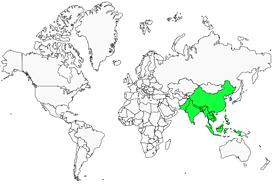
- Centropus sinensis sinensis (Pakistan through n India to se China)
- Centropus sinensis parroti (c and s India, Sri Lanka)
- Centropus sinensis intermedius (Bangladesh and Myanmar to s Thailand, Indochina and Malay Pen.)
- Centropus sinensis bubutus (Greater Sundas to sw Philippines)
- Centropus sinensis anonymus (s Philippines)
- Centropus sinensis kangeangensis (Kangean Is.. Java Sea.)
Foreign names
- Grand Coucal,
- Cucal chino,
- cucal-real,
- Heckenkuckuck,
- nagy bozótkakukk,
- Chinese Spoorkoekoek,
- Cucal maggiore,
- större sporrgök,
- Orientsporegjøk,
- ostrohár krovinový,
- kukačka vraní,
- Brunrygget Sporegøg,
- aasiankukaali,
- cucal gros,
- kukal zmienny,
- Обыкновенная шпорцевая кукушка,
- Bubut besar,
- オオバンケン,
- 褐翅鸦鹃,
- นกกระปูดใหญ่,
- 褐翅鴉鵑,
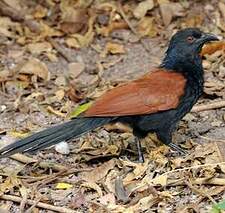
Habitat
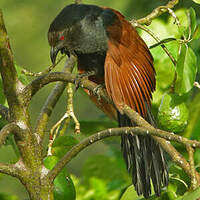
Forest : Subtropical/Tropical Mangrove Vegetation Above High Tide Level ; Shrubland : Subtropical/Tropical Dry, Subtropical/Tropical Moist ; Grassland : Subtropical/Tropical Dry ; Wetlands (inland) : Permanent Rivers/Streams/Creeks (includes waterfalls), Permanent Freshwater Marshes/Pools (under 8ha) ; Artificial/Terrestrial : Rural Gardens
Threats - protection
IUCN conservation status
Extinct
Threatened
Least
concern
concern
Extinc
in the Wild
in the Wild
Near
threatened
threatened
Not
evaluated
evaluated
EX
EW
CR
EN
VU
NT
LC
NE
Other sources of interest

- Accipitriformes
- Aegotheliformes
- Anseriformes
- Apodiformes
- Apterygiformes
- Bucerotiformes
- Caprimulgiformes
- Cariamiformes
- Casuariiformes
- Charadriiformes
- Ciconiiformes
- Coliiformes
- Columbiformes
- Coraciiformes
- Cuculiformes
- Eurypygiformes
- Falconiformes
- Galliformes
- Gaviiformes
- Gruiformes
- Leptosomiformes
- Mesitornithiformes
- Musophagiformes
- Nyctibiiformes
- Opisthocomiformes
- Otidiformes
- Passeriformes
- Pelecaniformes
- Phaethontiformes
- Phoenicopteriformes
- Piciformes
- Podargiformes
- Podicipediformes
- Procellariiformes
- Psittaciformes
- Pterocliformes
- Rheiformes
- Sphenisciformes
- Steatornithiformes
- Strigiformes
- Struthioniformes
- Suliformes
- Tinamiformes
- Trogoniformes