
Pacific Black Duck
Anas superciliosa - Canard à sourcils
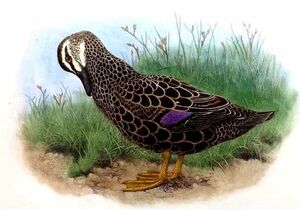
Systematics
-
Order:
Anseriformes
-
Family:
Anatidés
-
Genus:
Anas
-
Species:
superciliosa
Descriptor
Biometrics
- Size: 61 cm
- Wingspan: 82 à 93 cm.
- Weight: 1114 à 1340 g
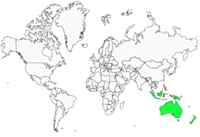
Geographic range
Identification
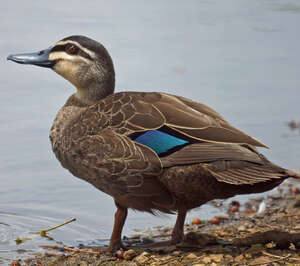
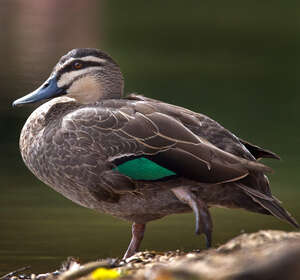
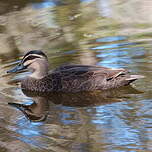
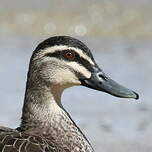
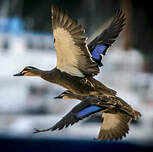
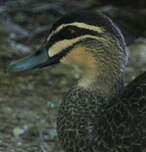
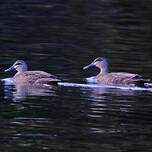
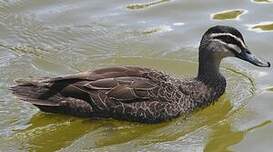
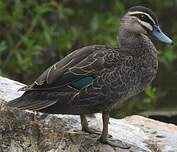
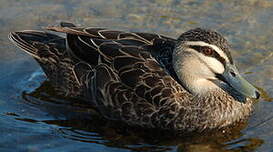
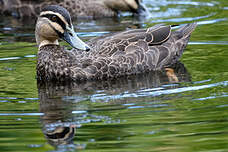
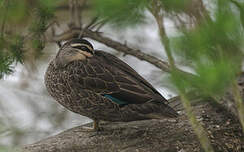
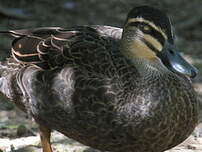
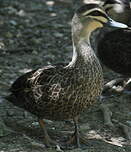
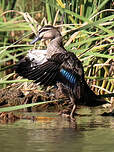
Pacific Black Duck (Anas superciliosa) is a species of bird in the Anatidae family.
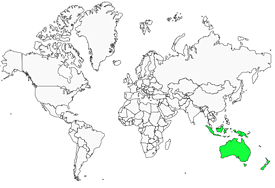
Subspecific information 2 subspecies
- Anas superciliosa superciliosa (Sundas to w New Guinea, w Australia and Tasmania, New Zealand)
- Anas superciliosa pelewensis (n and c New Guinea to Solomon Is. and French Polynesia)
Foreign names
- Canard à sourcils,
- Ánade cejudo,
- pato-de-sobrancelhas,
- Augenbrauenente,
- szemöldökös réce,
- Wenkbrauweend,
- Germano del Pacifico,
- stripand,
- Stripeand,
- kačica pruhohlavá,
- kachna pruhohlavá,
- Tøjleand,
- juovanaamasorsa,
- ànec cellut,
- kaczka pacyficzna,
- Серая кряква,
- Itik alis,
- マミジロカルガモ,
- 太平洋黑鸭,
- 澳洲灰鴨,
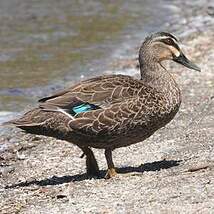
Habitat
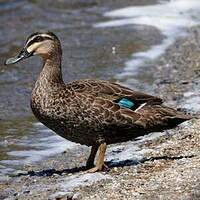
Wetlands (inland) : Permanent Rivers/Streams/Creeks (includes waterfalls), Bogs, Marshes, Swamps, Fens, Peatlands, Permanent Freshwater Lakes (over 8ha), Seasonal/Intermittent Freshwater Lakes (over 8ha), Permanent Freshwater Marshes/Pools (under 8ha), Seasonal/Intermittent Freshwater Marshes/Pools (under 8ha) ; Marine Neritic : Estuaries ; Marine Intertidal : Salt Marshes (Emergent Grasses) ; Artificial/Aquatic and Marine : Wastewater Treatment Areas
Threats - protection
IUCN conservation status
Extinct
Threatened
Least
concern
concern
Extinc
in the Wild
in the Wild
Near
threatened
threatened
Not
evaluated
evaluated
EX
EW
CR
EN
VU
NT
LC
NE
Sources of information
- Birds of Asia and Australia, David Alderton
- Birds of Australia, Peter Rowland
- Guide des canards, des oies et des cygnes, Steve Madge
- Vol. 2 - Handbook of the Birds of the World, Josep del Hoyo-Andrew Elliot--Jordi Sargatal
- ARKive, Christopher Parsons
- Avibase, Lepage Denis
- HBW Alive,
- Wikipedia (English version),
- IOC World Bird List (v13.2), Gill, F and D Donsker (Eds). 2023.
Other sources of interest

- Accipitriformes
- Aegotheliformes
- Anseriformes
- Apodiformes
- Apterygiformes
- Bucerotiformes
- Caprimulgiformes
- Cariamiformes
- Casuariiformes
- Charadriiformes
- Ciconiiformes
- Coliiformes
- Columbiformes
- Coraciiformes
- Cuculiformes
- Eurypygiformes
- Falconiformes
- Galliformes
- Gaviiformes
- Gruiformes
- Leptosomiformes
- Mesitornithiformes
- Musophagiformes
- Nyctibiiformes
- Opisthocomiformes
- Otidiformes
- Passeriformes
- Pelecaniformes
- Phaethontiformes
- Phoenicopteriformes
- Piciformes
- Podargiformes
- Podicipediformes
- Procellariiformes
- Psittaciformes
- Pterocliformes
- Rheiformes
- Sphenisciformes
- Steatornithiformes
- Strigiformes
- Struthioniformes
- Suliformes
- Tinamiformes
- Trogoniformes