
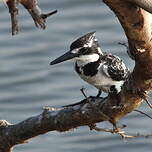
Pied Kingfisher
Ceryle rudis - Martin-pêcheur pie Alcyon pie
Systematics
-
Order:
Coraciiformes
-
Family:
Alcédinidés
-
Genus:
Ceryle
-
Species:
rudis
Descriptor
Biometrics
- Size: 25 cm
- Wingspan: 45 à 47 cm.
- Weight: 70 à 110 g
Longevity
4 years
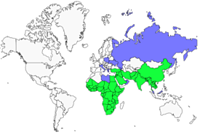
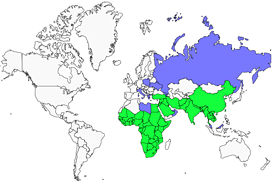
Geographic range
Identification
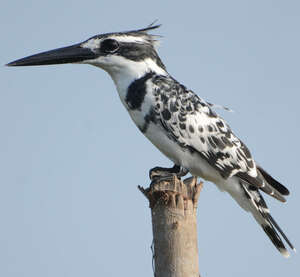
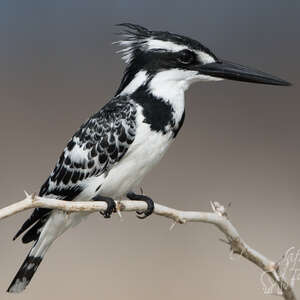
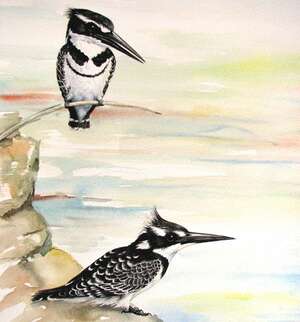
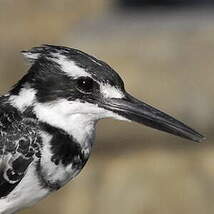
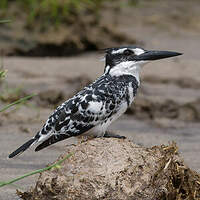
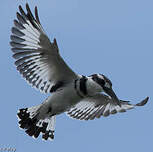
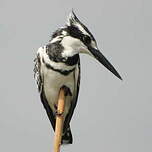
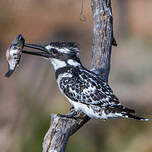
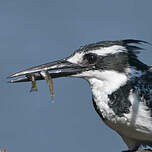
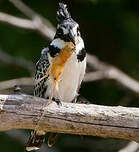
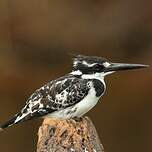
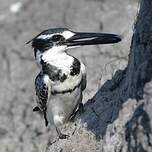
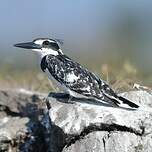
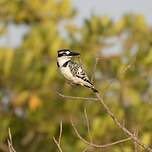
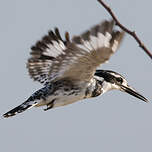
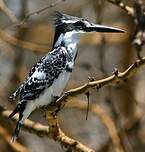
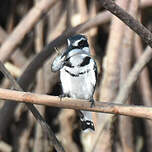
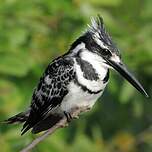
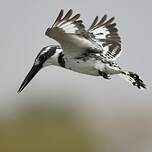
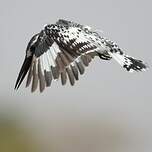
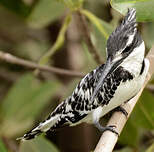
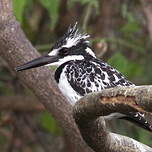
Pied Kingfisher (Ceryle rudis) is a species of bird in the Alcedinidae family.
Subspecific information 5 subspecies
- Ceryle rudis rudis (Egypt and Africa south of the Sahara)
- Ceryle rudis syriacus (Turkey to Israel east to sw Iran)
- Ceryle rudis leucomelanurus (e Afghanistan through India to s China and n Indochina)
- Ceryle rudis travancoreensis (sw India)
- Ceryle rudis insignis (e and se China, Hainan I.)
Foreign names
- Martin-pêcheur pie,
- Martín pescador pío,
- pica-peixe-malhado,
- Graufischer,
- tarka halkapó,
- Bonte IJsvogel,
- Martin pescatore bianco e nero,
- gråfiskare,
- Terneisfugl,
- rybárec strakatý,
- rybařík jižní,
- Gråfisker,
- kirjokalastaja,
- Bontvisvanger,
- alció garser,
- Skjaldþyrill,
- rybaczek srokaty,
- raibais dzenītis,
- črnobeli pasat,
- Малый пегий зимородок,
- ヒメヤマセミ,
- 斑鱼狗,
- นกกะเต็นปักหลัก,
- 斑翡翠,
Habitat
Forest : Subtropical/Tropical Mangrove Vegetation Above High Tide Level ; Grassland : Subtropical/Tr
Threats - protection
IUCN conservation status
Extinct
Threatened
Least
concern
concern
Extinc
in the Wild
in the Wild
Near
threatened
threatened
Not
evaluated
evaluated
EX
EW
CR
EN
VU
NT
LC
NE
Sources of information
- Vol. 7 - Handbook of the Birds of the World, Josep del Hoyo-Andrew Elliott-Jordi Sargatal
- IOC World Bird List (v13.2), Gill, F and D Donsker (Eds). 2023.
Other sources of interest

- Accipitriformes
- Aegotheliformes
- Anseriformes
- Apodiformes
- Apterygiformes
- Bucerotiformes
- Caprimulgiformes
- Cariamiformes
- Casuariiformes
- Charadriiformes
- Ciconiiformes
- Coliiformes
- Columbiformes
- Coraciiformes
- Cuculiformes
- Eurypygiformes
- Falconiformes
- Galliformes
- Gaviiformes
- Gruiformes
- Leptosomiformes
- Mesitornithiformes
- Musophagiformes
- Nyctibiiformes
- Opisthocomiformes
- Otidiformes
- Passeriformes
- Pelecaniformes
- Phaethontiformes
- Phoenicopteriformes
- Piciformes
- Podargiformes
- Podicipediformes
- Procellariiformes
- Psittaciformes
- Pterocliformes
- Rheiformes
- Sphenisciformes
- Steatornithiformes
- Strigiformes
- Struthioniformes
- Suliformes
- Tinamiformes
- Trogoniformes