
White-backed Vulture
Gyps africanus - Vautour africain
Systematics
-
Order:
Accipitriformes
-
Family:
Accipitridés
-
Genus:
Gyps
-
Species:
africanus
Descriptor
Biometrics
- Size: 94 cm
- Wingspan: 218 à 220 cm.
- Weight: 4200 à 7200 g
Longevity
19 years
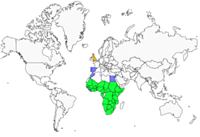
Geographic range
Identification
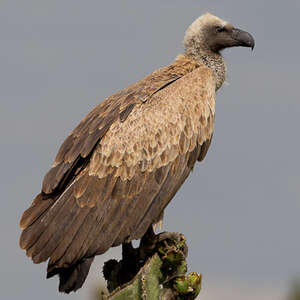
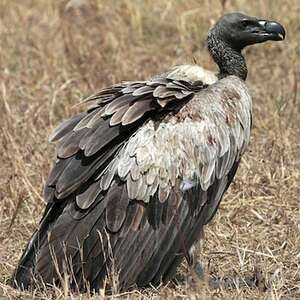
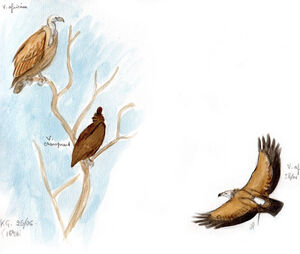
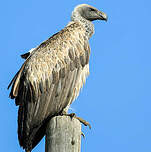
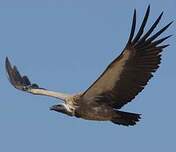
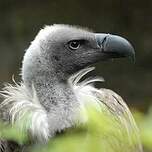
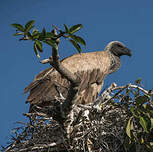
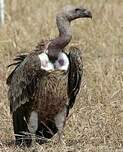
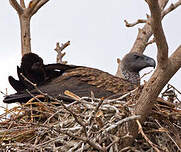
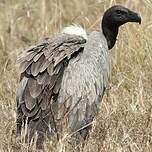
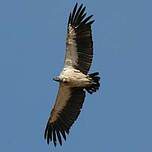
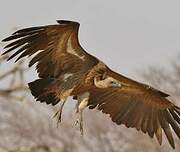
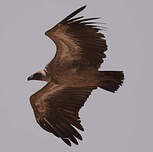
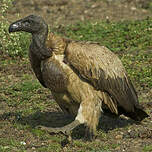
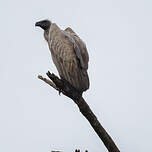
White-backed Vulture (Gyps africanus) is a species of bird in the Accipitridae family.
Subspecific information monotypic species
Foreign names
- Vautour africain,
- Buitre dorsiblanco africano,
- grifo-de-dorso-branco,
- Weißrückengeier,
- fehérhátú keselyű,
- Witruggier,
- Grifone africano,
- vitryggig gam,
- Hvitryggribb,
- sup hrdzavohnedý,
- sup africký,
- Hvidrygget Grib,
- savannikorppikotka,
- Witrugaasvoël,
- voltor dorsiblanc africà,
- sęp afrykański,
- Африканский гриф,
- コシジロハゲワシ,
- 非洲白背兀鹫,
- 白背兀鷲,
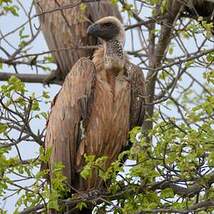
Habitat
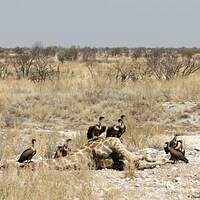
Forest : Subtropical/Tropical Dry ; Savanna : Dry ; Shrubland : Subtropical/Tropical Dry ; Grassland : Subtropical/Tropical Dry ; Desert : Hot ; Artificial/Terrestrial : Pastureland
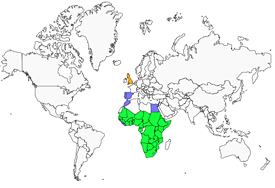
Threats - protection
IUCN conservation status
Extinct
Threatened
Least
concern
concern
Extinc
in the Wild
in the Wild
Near
threatened
threatened
Not
evaluated
evaluated
EX
EW
CR
EN
VU
NT
LC
NE
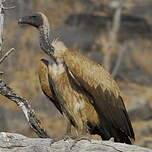
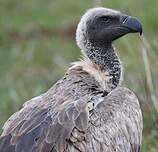
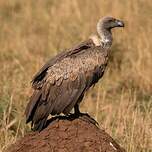
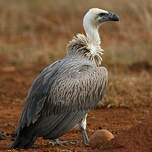
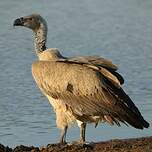
Sources of information
- Raptors of the World, a field guide, Ferguson-Lees James et Christie David
- Vol. 2 - Handbook of the Birds of the World, Josep del Hoyo-Andrew Elliot--Jordi Sargatal
- Birds of East Africa, C.A.W. Guggisberg
- Birds of Africa South of the Sahara, Ian Sinclair and Peter Ryan
- Avibase, Lepage Denis
- Wikipédia, Wikipedia, The Free Encyclopedia
- IOC World Bird List (v13.2), Gill, F and D Donsker (Eds). 2023.
Other sources of interest

- Accipitriformes
- Aegotheliformes
- Anseriformes
- Apodiformes
- Apterygiformes
- Bucerotiformes
- Caprimulgiformes
- Cariamiformes
- Casuariiformes
- Charadriiformes
- Ciconiiformes
- Coliiformes
- Columbiformes
- Coraciiformes
- Cuculiformes
- Eurypygiformes
- Falconiformes
- Galliformes
- Gaviiformes
- Gruiformes
- Leptosomiformes
- Mesitornithiformes
- Musophagiformes
- Nyctibiiformes
- Opisthocomiformes
- Otidiformes
- Passeriformes
- Pelecaniformes
- Phaethontiformes
- Phoenicopteriformes
- Piciformes
- Podargiformes
- Podicipediformes
- Procellariiformes
- Psittaciformes
- Pterocliformes
- Rheiformes
- Sphenisciformes
- Steatornithiformes
- Strigiformes
- Struthioniformes
- Suliformes
- Tinamiformes
- Trogoniformes