
Bluethroat
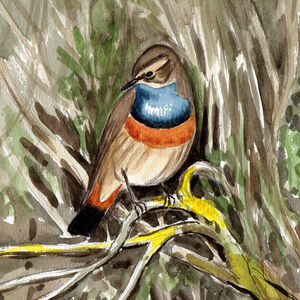
Luscinia svecica - Gorgebleue à miroir
Systematics
-
Order:
Passeriformes
-
Family:
Muscicapidés
-
Genus:
Luscinia
-
Species:
svecica
Descriptor
Biometrics
- Size: 15 cm
- Wingspan: 23 cm.
- Weight: 15 à 23 g
Longevity
8 years
Geographic range

Identification
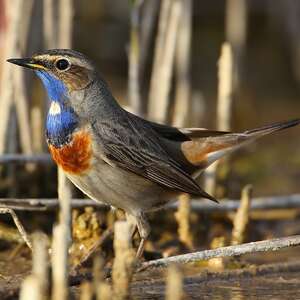
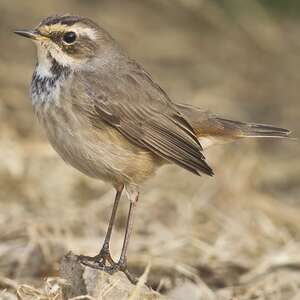
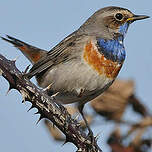
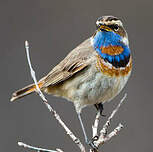
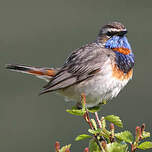
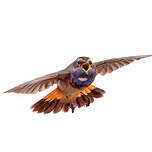
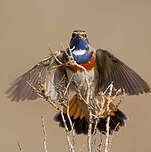
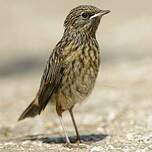
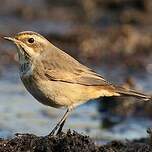
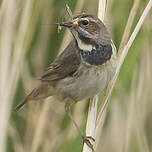
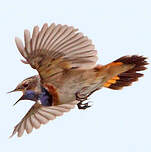
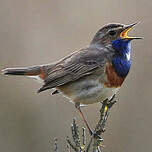
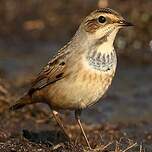
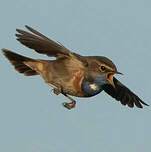
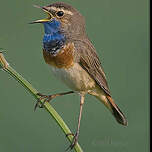
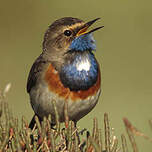
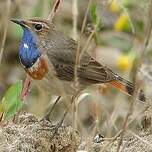
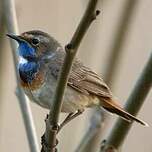
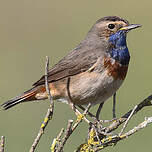
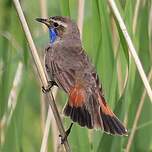
Bluethroat (Luscinia svecica) is a species of bird in the Muscicapidae family.
Subspecific information 11 subspecies
- Luscinia svecica svecica (n Europe, n Asia, n Alaska and nw Canada)
- Luscinia svecica namnetum (sw and c France)
- Luscinia svecica cyanecula (Netherlands and n, e France to Belarus and nw Ukraine)
- Luscinia svecica azuricollis (n, c Spain)
- Luscinia svecica volgae (ne Ukraine, c and e European Russia)
- Luscinia svecica magna (e Turkey, the Caucasus and n Iran)
- Luscinia svecica pallidogularis (Kazakhstan and Turkmenistan)
- Luscinia svecica abbotti (n Afghanistan, n Pakistan and the nw Himalayas)
- Luscinia svecica saturatior (mountains of c Asia)
- Luscinia svecica kobdensis (w Mongolia and w China)
- Luscinia svecica przevalskii (c China)
Foreign names
- Gorgebleue à miroir,
- Ruiseñor pechiazul,
- pisco-de-peito-azul,
- Blaukehlchen,
- kékbegy,
- Blauwborst,
- Pettazzurro,
- blåhake,
- Blåstrupe,
- slávik modrák,
- slavík modráček,
- Blåhals,
- sinirinta,
- cotxa blava,
- Blábrystingur,
- podróżniczek,
- zilrīklīte,
- modra taščica,
- Варакушка,
- オガワコマドリ,
- 蓝喉歌鸲,
- นกคอมรกต,
- 藍喉鴝〔藍喉歌鴝,藍點頦〕,
Habitat
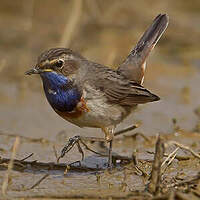
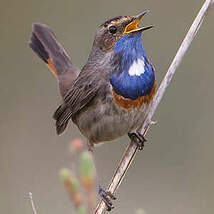
Forest : Boreal, Temperate ; Shrubland : Boreal, Temperate, Subtropical/Tropical Dry, Subtropical/Tr

Threats - protection
IUCN conservation status
Extinct
Threatened
Least
concern
concern
Extinc
in the Wild
in the Wild
Near
threatened
threatened
Not
evaluated
evaluated
EX
EW
CR
EN
VU
NT
LC
NE
Sources of information
- IOC World Bird List (v14.1), Gill, F and D Donsker (Eds). 2024-04-18.
Other sources of interest

- Accipitriformes
- Aegotheliformes
- Anseriformes
- Apodiformes
- Apterygiformes
- Bucerotiformes
- Caprimulgiformes
- Cariamiformes
- Casuariiformes
- Charadriiformes
- Ciconiiformes
- Coliiformes
- Columbiformes
- Coraciiformes
- Cuculiformes
- Eurypygiformes
- Falconiformes
- Galliformes
- Gaviiformes
- Gruiformes
- Leptosomiformes
- Mesitornithiformes
- Musophagiformes
- Nyctibiiformes
- Opisthocomiformes
- Otidiformes
- Passeriformes
- Pelecaniformes
- Phaethontiformes
- Phoenicopteriformes
- Piciformes
- Podargiformes
- Podicipediformes
- Procellariiformes
- Psittaciformes
- Pterocliformes
- Rheiformes
- Sphenisciformes
- Steatornithiformes
- Strigiformes
- Struthioniformes
- Suliformes
- Tinamiformes
- Trogoniformes