
Tawny Eagle
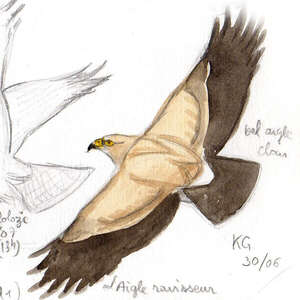
Aquila rapax - Aigle ravisseur
Systematics
-
Order:
Accipitriformes
-
Family:
Accipitridés
-
Genus:
Aquila
-
Species:
rapax
Descriptor
Biometrics
- Size: 75 cm
- Wingspan: 159 à 183 cm.
- Weight: 1700 à 3050 g
Longevity
45 years
Geographic range

Identification
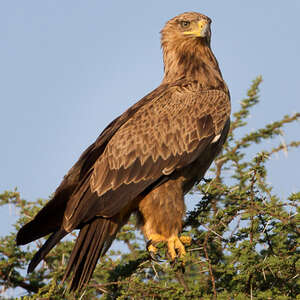
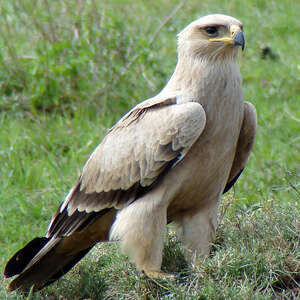
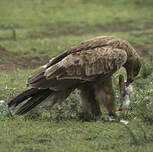
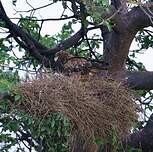
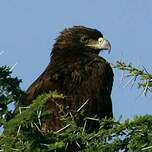
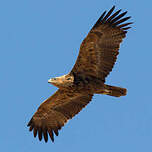
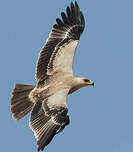
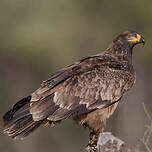
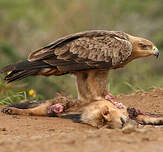
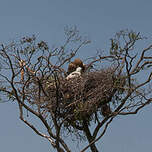
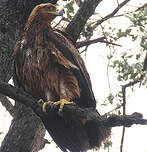
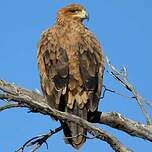
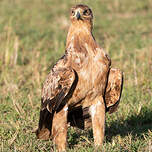
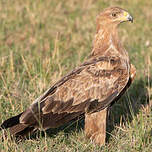
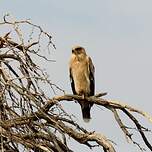
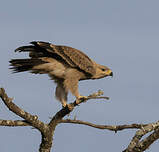
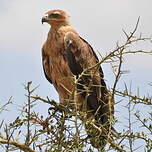
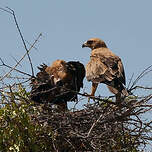
Tawny Eagle (Aquila rapax) is a species of bird in the Accipitridae family.
Subspecific information 3 subspecies
- Aquila rapax rapax (s Kenya and DRCongo to South Africa)
- Aquila rapax vindhiana (Pakistan, India, Nepal)
- Aquila rapax belisarius (Morocco and Algeria, s Mauritania to Ethiopia and sw Arabia south to DRCongo, Uganda and Kenya)
Foreign names
- Aigle ravisseur,
- Águila rapaz,
- águia-fulva,
- Savannenadler,
- szavannasas,
- Savannearend,
- Aquila rapace,
- savannörn,
- Savanneørn,
- orol bronzový,
- orel okrový,
- Rovørn,
- savannikotka,
- Roofarend,
- àguila rapaç,
- Hræörn,
- orzeł sawannowy,
- savannu ērglis,
- roparski orel,
- Степной орёл,
- アフリカソウゲンワシ,
- 茶色雕,
- 草原鵰,

Habitat
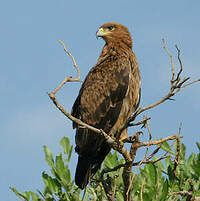
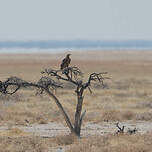
Forest : Subtropical/Tropical Dry, Subtropical/Tropical Moist Montane ; Savanna : Dry ; Shrubland : Subtropical/Tropical Dry ; Grassland : Subtropical/Tropical Dry, Subtropical/Tropical High Altitude ; Artificial/Terrestrial : Arable Land

Threats - protection
IUCN conservation status
Extinct
Threatened
Least
concern
concern
Extinc
in the Wild
in the Wild
Near
threatened
threatened
Not
evaluated
evaluated
EX
EW
CR
EN
VU
NT
LC
NE
Sources of information
- Vol. 2 - Handbook of the Birds of the World, Josep del Hoyo-Andrew Elliot--Jordi Sargatal
- Raptors of the World, a field guide, Ferguson-Lees James et Christie David
- Birds of Prey of Africa and its Islands, Alan and Meg Kemp
- Guide des rapaces diurnes : Europe, Afrique du Nord et Moyen-Orient, Benny Gensbol
- ARKive, Christopher Parsons
- Avibase, Lepage Denis
- Animal Diversity Web, University of Michigan Museum of Zoology
- Wikipédia, Wikipedia, The Free Encyclopedia
- IOC World Bird List (v14.1), Gill, F and D Donsker (Eds). 2024-04-18.
Other sources of interest

- Accipitriformes
- Aegotheliformes
- Anseriformes
- Apodiformes
- Apterygiformes
- Bucerotiformes
- Caprimulgiformes
- Cariamiformes
- Casuariiformes
- Charadriiformes
- Ciconiiformes
- Coliiformes
- Columbiformes
- Coraciiformes
- Cuculiformes
- Eurypygiformes
- Falconiformes
- Galliformes
- Gaviiformes
- Gruiformes
- Leptosomiformes
- Mesitornithiformes
- Musophagiformes
- Nyctibiiformes
- Opisthocomiformes
- Otidiformes
- Passeriformes
- Pelecaniformes
- Phaethontiformes
- Phoenicopteriformes
- Piciformes
- Podargiformes
- Podicipediformes
- Procellariiformes
- Psittaciformes
- Pterocliformes
- Rheiformes
- Sphenisciformes
- Steatornithiformes
- Strigiformes
- Struthioniformes
- Suliformes
- Tinamiformes
- Trogoniformes