
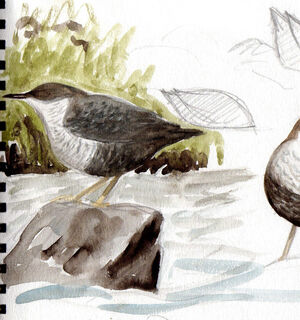
White-throated Dipper
Cinclus cinclus - Cincle plongeur
Systematics
-
Order:
Passeriformes
-
Family:
Cinclidés
-
Genus:
Cinclus
-
Species:
cinclus
Descriptor
Biometrics
- Size: 20 cm
- Wingspan: 25 à 30 cm.
- Weight: 46 à 75 g
Longevity
8 years
Geographic range

Identification
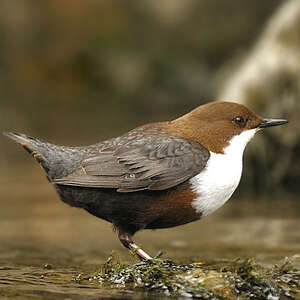
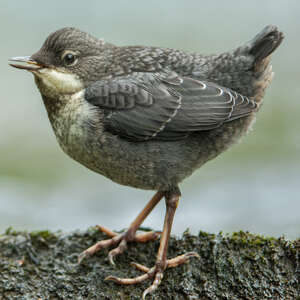
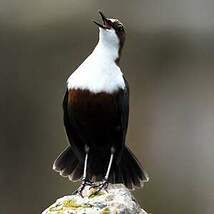
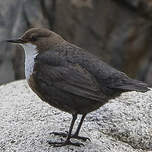
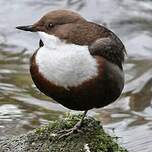
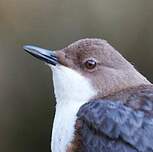
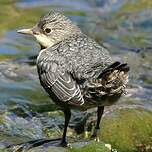
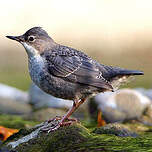
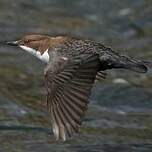
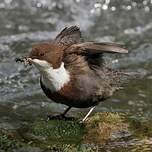
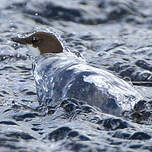
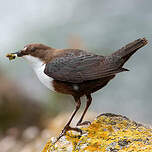
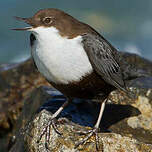
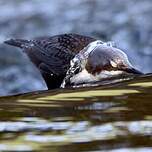
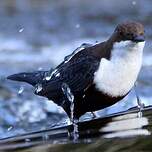
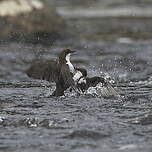
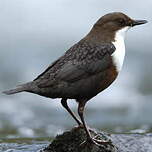
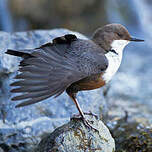
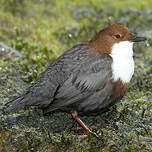
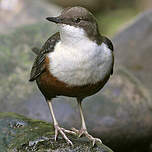
White-throated Dipper (Cinclus cinclus) is a species of bird in the Cinclidae family.
Subspecific information 14 subspecies
- Cinclus cinclus cinclus (n Europe, w and c France and n Spain, Corsica and Sardinia)
- Cinclus cinclus hibernicus (Ireland and w Scotland)
- Cinclus cinclus gularis (Scotland. except w. , n, c and w England and Wales)
- Cinclus cinclus aquaticus (c and s Europe)
- Cinclus cinclus olympicus (Cyprus)
- Cinclus cinclus minor (nw Africa)
- Cinclus cinclus rufiventris (w Syria and Lebanon)
- Cinclus cinclus uralensis (Ural Mts.. w Russia.)
- Cinclus cinclus caucasicus (Turkey to the Caucasus, n Iran and n Iraq)
- Cinclus cinclus persicus (sw Iran)
- Cinclus cinclus leucogaster (sc Russia, nw China south to Afghanistan and n Pakistan)
- Cinclus cinclus baicalensis (sc and se Siberia)
- Cinclus cinclus cashmeriensis (w and c Himalayas)
- Cinclus cinclus przewalskii (e Himalayas, s Tibet and w China)
Foreign names
- Cincle plongeur,
- Mirlo acuático europeo,
- melro-de-água-eurasiático,
- Wasseramsel,
- vízirigó,
- Waterspreeuw,
- Merlo acquaiolo,
- strömstare,
- Fossekall,
- vodnár potočný,
- skorec vodní,
- Vandstær,
- koskikara,
- merla d'aigua europea,
- Fossbúi,
- pluszcz (zwyczajny),
- ūdensstrazds,
- povodni kos,
- Оляпка,
- ムナジロカワガラス,
- 河乌,
- 白喉河烏,
Habitat
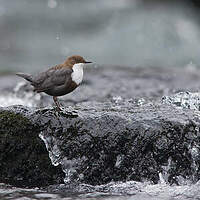
Wetlands (inland) : Permanent Rivers/Streams/Creeks (includes waterfalls), Permanent Freshwater Lakes (over 8ha) ; Rocky areas (eg. inland cliffs, mountain peaks) :

Threats - protection
IUCN conservation status
Extinct
Threatened
Least
concern
concern
Extinc
in the Wild
in the Wild
Near
threatened
threatened
Not
evaluated
evaluated
EX
EW
CR
EN
VU
NT
LC
NE
Sources of information
- Birds of the World, The Cornell Lab of Ornithology
- xeno-canto, Sharing bird sounds from around the world,
- IOC World Bird List (v14.1), Gill, F and D Donsker (Eds). 2024-04-18.
Other sources of interest

- Accipitriformes
- Aegotheliformes
- Anseriformes
- Apodiformes
- Apterygiformes
- Bucerotiformes
- Caprimulgiformes
- Cariamiformes
- Casuariiformes
- Charadriiformes
- Ciconiiformes
- Coliiformes
- Columbiformes
- Coraciiformes
- Cuculiformes
- Eurypygiformes
- Falconiformes
- Galliformes
- Gaviiformes
- Gruiformes
- Leptosomiformes
- Mesitornithiformes
- Musophagiformes
- Nyctibiiformes
- Opisthocomiformes
- Otidiformes
- Passeriformes
- Pelecaniformes
- Phaethontiformes
- Phoenicopteriformes
- Piciformes
- Podargiformes
- Podicipediformes
- Procellariiformes
- Psittaciformes
- Pterocliformes
- Rheiformes
- Sphenisciformes
- Steatornithiformes
- Strigiformes
- Struthioniformes
- Suliformes
- Tinamiformes
- Trogoniformes