
Black-browed Albatross
Thalassarche melanophris - Albatros à sourcils noirs
Systematics
-
Order:
Procellariiformes
-
Family:
Diomédéidés
-
Genus:
Thalassarche
-
Species:
melanophris
Descriptor
Biometrics
- Size: 93 cm
- Wingspan: 205 à 240 cm.
- Weight: 2840 à 5000 g
Longevity
60 years
Geographic range

Identification
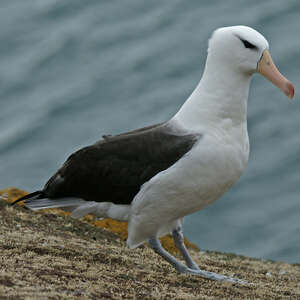
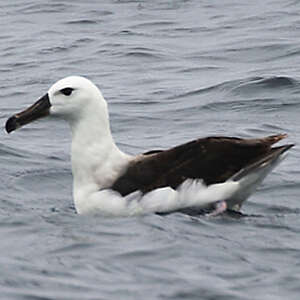
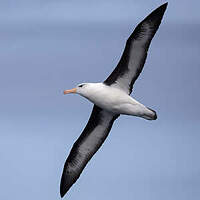
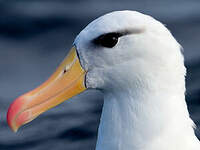
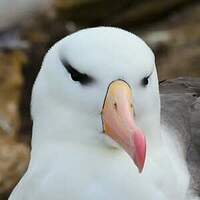
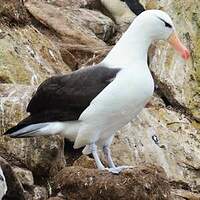
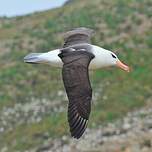
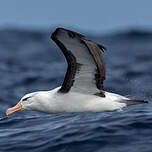
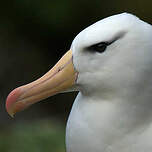
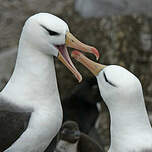
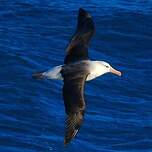
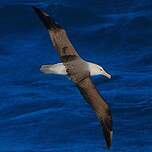
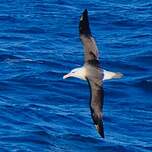
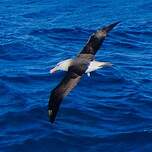
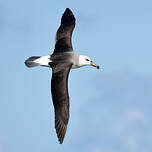
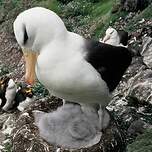
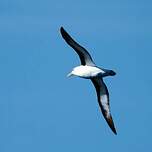
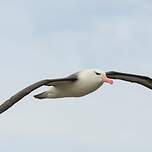
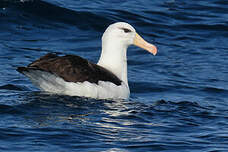
Larger than a gannet, the black-browed albatross is a massive bird wth a wingspan that can reach 2.5 meters. The wings a long and thin and black (their central underwing is white), the tail is black and short and the back is black. The rest of the bird is white. There is a small black mask around the eyes reminiscent of a brow. The bill is yellow, with a hooked red tip. The nostrils are tubular.
Subspecific information monotypic species
Foreign names
- Albatros à sourcils noirs,
- Albatros ojeroso,
- albatroz-de-sobrancelhas,
- Schwarzbrauenalbatros,
- dolmányos albatrosz,
- Wenkbrauwalbatros,
- Albatros sopracciglineri,
- svartbrynad albatross,
- Svartbrynalbatross,
- albatros čiernobrvý,
- albatros černobrvý,
- Sortbrynet Albatros,
- mustakulma-albatrossi,
- Swartrugmalmok (Swartrugalbatros),
- albatros cellanegre,
- Svaltrosi,
- albatros czarnobrewy,
- melnaču albatross,
- falklandski albatros,
- Чернобровый альбатрос,
- マユグロアホウドリ,
- 黑眉信天翁,
- 黑眉信天翁,
Voice song and cries
Habitat
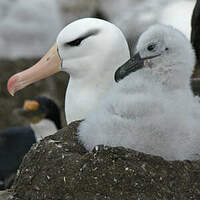
Outside the breeding period, the black-browed albatross is only found at sea. It only visits land to breed. Colonies are often found on islands. Adults can live up to a few decades.
Behaviour character trait
Like all Procellariiformes, the black-browed albatross has a desalination gland that allow it to assimilate seawater, the excess salt being excreted near the nostrils.
Flight
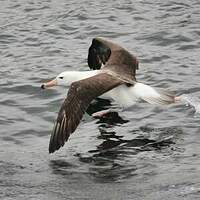
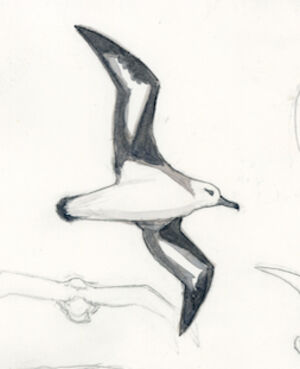
The black-browed albatross is perfectly adapted to flying. The wing design allow it to withstand the worst weather conditions. The long thin wings give the bird strength and flexibility in flight. Black-browed albatrosses excel at gliding and fly very low, just above the waves.
Dietfeeding habits
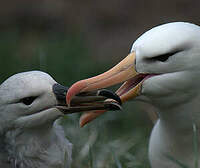
This species eats fish as well as offal and discards from fishing boats.
Reproduction nesting
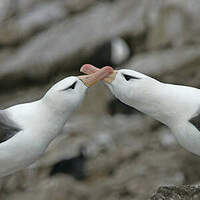
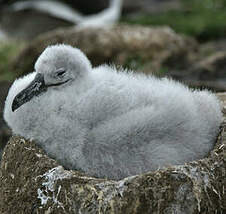
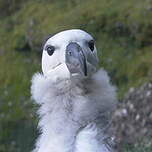
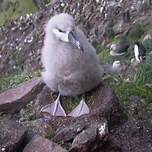
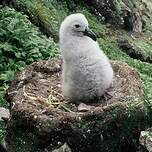
The nest of this species is a small mound of soil topped by a shallow bowl where a single egg is laid. In some exceptional cases, the nest can be a meter high. Incubation lasts 71 days and both parents take turns. Colonies, ideally placed in the most exposed area of islands, can harbour a few tens of thousands of birds (e.g. the Falkland Islands, off Cape Horn). Chicks are protected by a thick grey down. Young birds are able to fly after 4 to 5 months.
Geographic range

Threats - protection
IUCN conservation status
concern
in the Wild
threatened
evaluated
The global population is estimated at 600,000 individuals. It is the most widespread and abundant albatross species. However, its survival is threatened at medium term by current fishing practices both in terms of prey availability and incidental killing of albatrosses. An estimated 40,000 albatrosses are accidentally killed each year as they interact with fishing vessels.
Sources of information
- IOC World Bird List (v14.1), Gill, F and D Donsker (Eds). 2024-04-18.
Other sources of interest

- Accipitriformes
- Aegotheliformes
- Anseriformes
- Apodiformes
- Apterygiformes
- Bucerotiformes
- Caprimulgiformes
- Cariamiformes
- Casuariiformes
- Charadriiformes
- Ciconiiformes
- Coliiformes
- Columbiformes
- Coraciiformes
- Cuculiformes
- Eurypygiformes
- Falconiformes
- Galliformes
- Gaviiformes
- Gruiformes
- Leptosomiformes
- Mesitornithiformes
- Musophagiformes
- Nyctibiiformes
- Opisthocomiformes
- Otidiformes
- Passeriformes
- Pelecaniformes
- Phaethontiformes
- Phoenicopteriformes
- Piciformes
- Podargiformes
- Podicipediformes
- Procellariiformes
- Psittaciformes
- Pterocliformes
- Rheiformes
- Sphenisciformes
- Steatornithiformes
- Strigiformes
- Struthioniformes
- Suliformes
- Tinamiformes
- Trogoniformes