
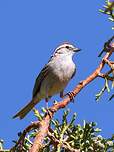
Chipping Sparrow
Spizella passerina - Bruant familier
Systematics
-
Order:
Passeriformes
-
Family:
Passerellidés
-
Genus:
Spizella
-
Species:
passerina
Descriptor
Biometrics
- Size: 14 cm
- Wingspan: 19 à 21 cm.
- Weight: 11 à 15 g
Longevity
9 years
Geographic range

Identification
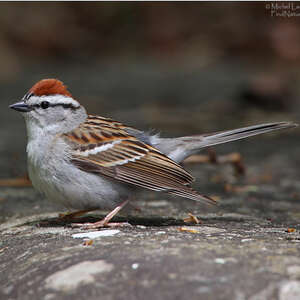
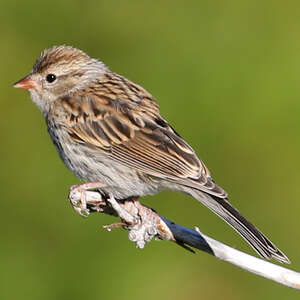
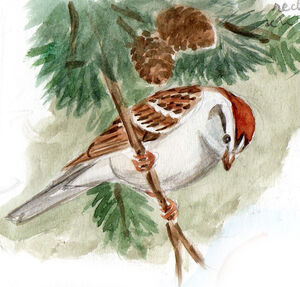
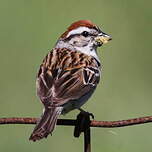
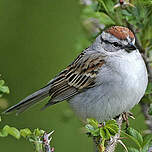
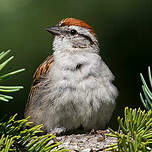
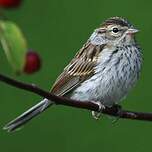
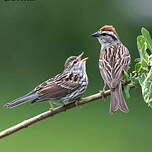
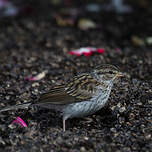
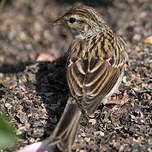
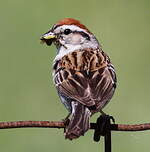
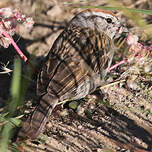
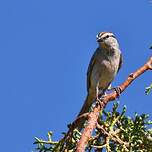
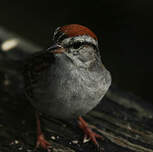
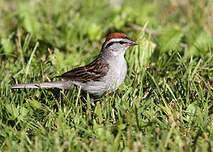
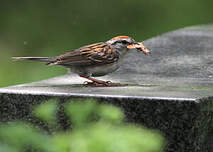
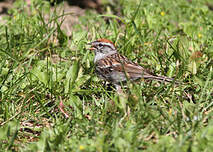
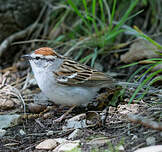
Chipping Sparrow (Spizella passerina) is a species of bird in the Passerellidae family.
Subspecific information 5 subspecies
- Spizella passerina passerina (se Canada to c and e USA)
- Spizella passerina arizonae (Alaska to nw Mexico)
- Spizella passerina atremaea (w Mexico)
- Spizella passerina mexicana (c and s Mexico, nw Guatemala)
- Spizella passerina pinetorum (ne Guatemala and Belize to ne Nicaragua)
Foreign names
- Bruant familier,
- Chingolo cejiblanco,
- tico-tico-de-coroa-ferrugínea,
- Schwirrammer,
- zümmögő verébsármány,
- Musgors,
- Passero cinquettante,
- tjippsparv,
- Brunissespurv,
- strnádlik vrabčí,
- strnádka vrabcovitá,
- Rustkronet Træspurv,
- kenttäsirkkuli,
- sit cellablanc,
- spizela białobrewa,
- čipulis,
- Обыкновенная воробьиная овсянка,
- チャガシラヒメドリ,
- 棕顶雀鹀,
- 褐斑翅雀鵐,
Habitat
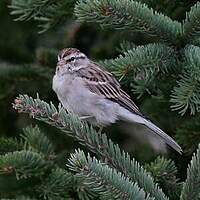
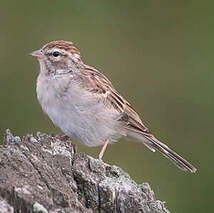
Forest : Boreal, Temperate, Subtropical/Tropical Dry, Subtropical/Tropical Moist Montane ; Shrubland : Temperate, Subtropical/Tropical High Altitude ; Grassland : Subtropical/Tropical Dry ; Artificial/Terrestrial : Rural Gardens

Threats - protection
IUCN conservation status
Extinct
Threatened
Least
concern
concern
Extinc
in the Wild
in the Wild
Near
threatened
threatened
Not
evaluated
evaluated
EX
EW
CR
EN
VU
NT
LC
NE
Sources of information
- Field Guide to the Birds of Western North America, Jon L. Dunn and Jonathan Alderfer
- Field guide to the birds of Eastern North America, Jon L. Dunn and Jonathan Alderer
- American Birding Association Field Guide to Birds of California, Alvaro Jaramillo
- All About Birds, Cornell Lab of Ornithology
- Audubon,
- BirdLife International, BirdLife International
- Birds of the World, The Cornell Lab of Ornithology
- IOC World Bird List (v14.1), Gill, F and D Donsker (Eds). 2024-04-18.
Other sources of interest

- Accipitriformes
- Aegotheliformes
- Anseriformes
- Apodiformes
- Apterygiformes
- Bucerotiformes
- Caprimulgiformes
- Cariamiformes
- Casuariiformes
- Charadriiformes
- Ciconiiformes
- Coliiformes
- Columbiformes
- Coraciiformes
- Cuculiformes
- Eurypygiformes
- Falconiformes
- Galliformes
- Gaviiformes
- Gruiformes
- Leptosomiformes
- Mesitornithiformes
- Musophagiformes
- Nyctibiiformes
- Opisthocomiformes
- Otidiformes
- Passeriformes
- Pelecaniformes
- Phaethontiformes
- Phoenicopteriformes
- Piciformes
- Podargiformes
- Podicipediformes
- Procellariiformes
- Psittaciformes
- Pterocliformes
- Rheiformes
- Sphenisciformes
- Steatornithiformes
- Strigiformes
- Struthioniformes
- Suliformes
- Tinamiformes
- Trogoniformes